
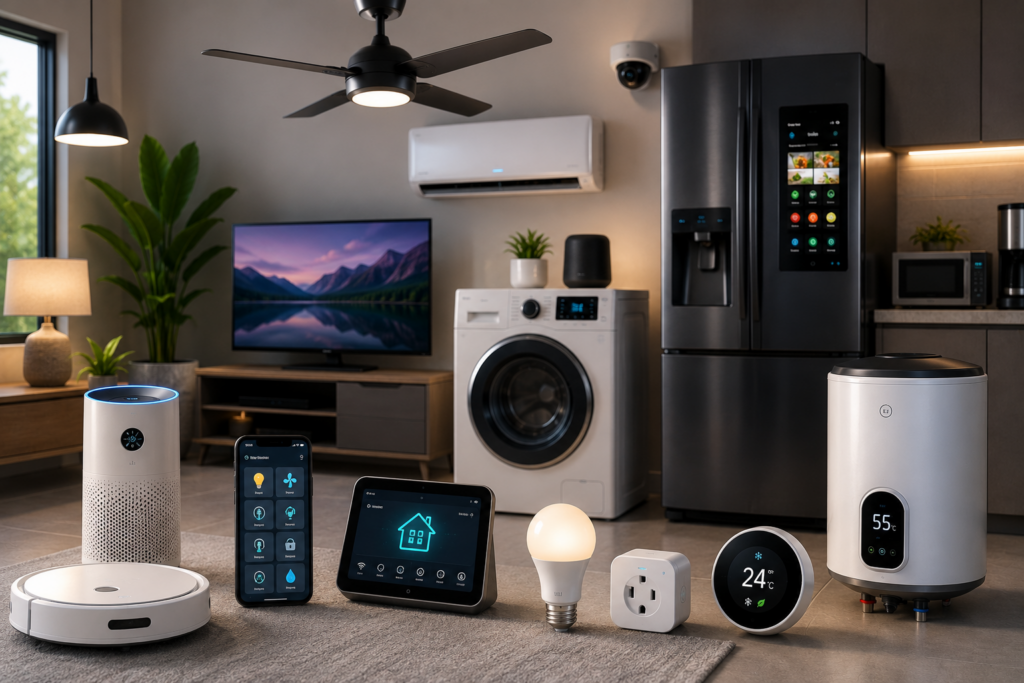
Smart Home Devices That Save Electricity: 10 Smart Solutions for Every Indian Home
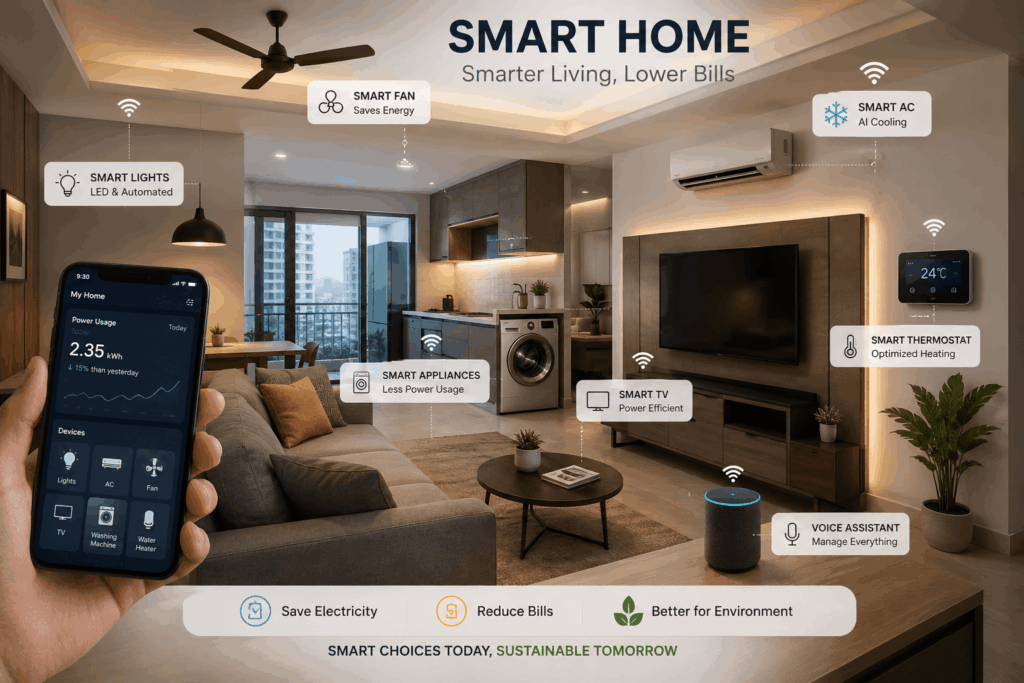
Electricity bills are increasing every year, making homeowners look for smarter ways to reduce energy consumption. Smart Home Devices That Save Electricity are becoming one of the best investments for Indian households because they not only lower electricity bills but also improve convenience, comfort, and security. With automation, remote control, and intelligent scheduling, these devices ensure that electricity is used only when needed.
Whether you live in an apartment or a large house, installing Smart Home Devices That Save Electricity can significantly reduce unnecessary power usage. In this guide, we’ll explore the top 10 energy-saving smart devices, their benefits, and how they can help you build an energy-efficient home.
Why Smart Home Devices Help Save Electricity
Modern smart home technology is designed to optimize energy usage without compromising comfort. These devices communicate through Wi-Fi, Bluetooth, or Zigbee and can be controlled using mobile apps or voice assistants like Google Assistant and Amazon Alexa.
Key Benefits
- Automatically turn off unused appliances
- Reduce standby power consumption
- Monitor real-time electricity usage
- Schedule appliances to run only when required
- Improve home comfort while lowering energy bills
- Support sustainable and eco-friendly living
According to the International Energy Agency (IEA), improving energy efficiency is one of the most effective ways to reduce electricity consumption and carbon emissions.
External Resource:
https://www.iea.org/topics/energy-efficiency
1. Smart LED Bulbs
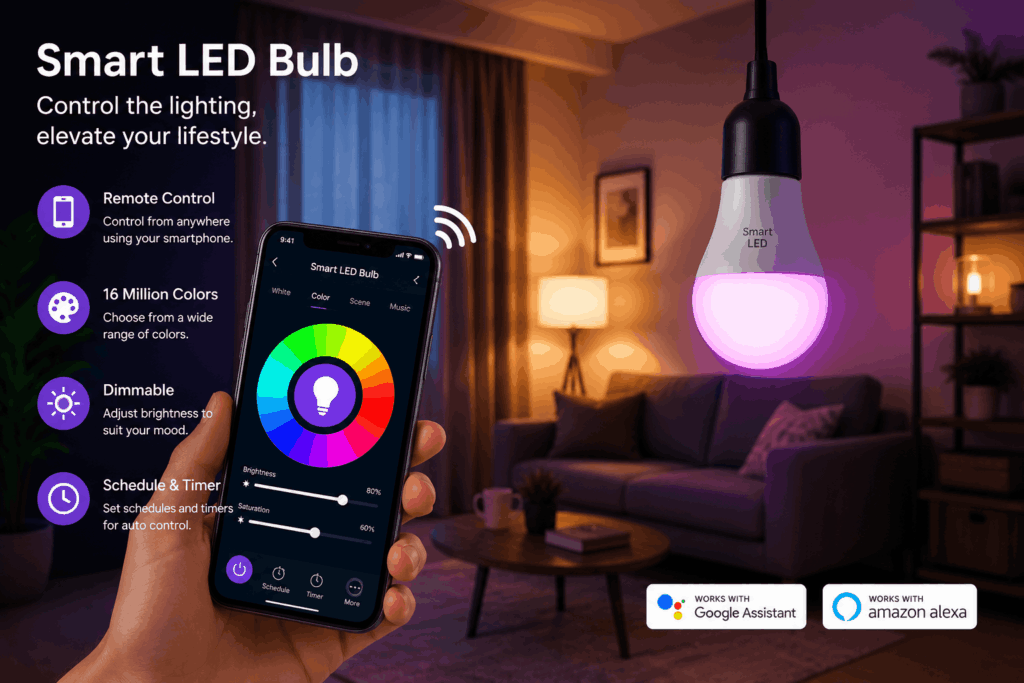
Smart LED bulbs consume far less electricity than traditional incandescent bulbs. They can be controlled remotely, dimmed according to your needs, and scheduled to switch on or off automatically.
Features
- Remote control via smartphone
- Brightness adjustment
- Timer and scheduling
- Voice control support
- Long lifespan
Best for: Living rooms, bedrooms, kitchens, and hallways.
2. Smart Plugs for Energy Monitoring
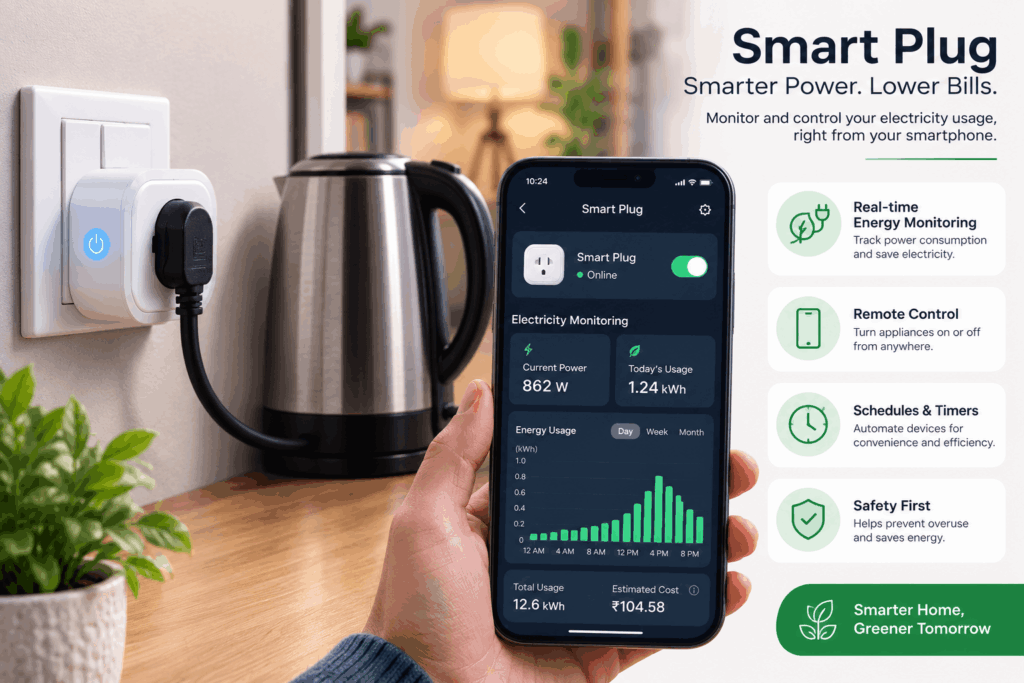
Smart plugs convert ordinary appliances into smart appliances. They allow users to control devices remotely while tracking electricity usage.
Benefits
- Switch appliances on or off remotely
- Schedule operation times
- Monitor energy consumption
- Eliminate phantom power usage
Ideal appliances include:
- Television
- Water heater
- Coffee maker
- Iron
- Charging stations
3. Smart Thermostats and Air Conditioner Controllers
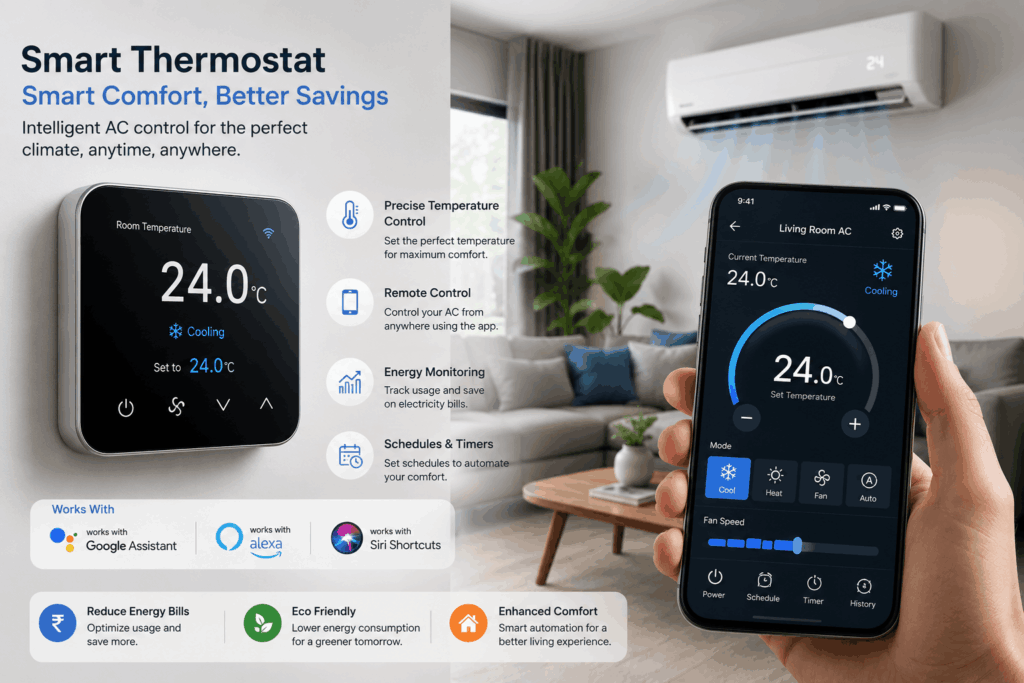
Air conditioners consume a major portion of household electricity, especially during Indian summers.
Smart AC controllers automatically adjust temperatures based on occupancy and weather conditions, reducing unnecessary energy usage.
Advantages
- Automatic temperature adjustment
- Weekly schedules
- Remote access
- Energy reports
- Better cooling efficiency
4. Smart Ceiling Fans
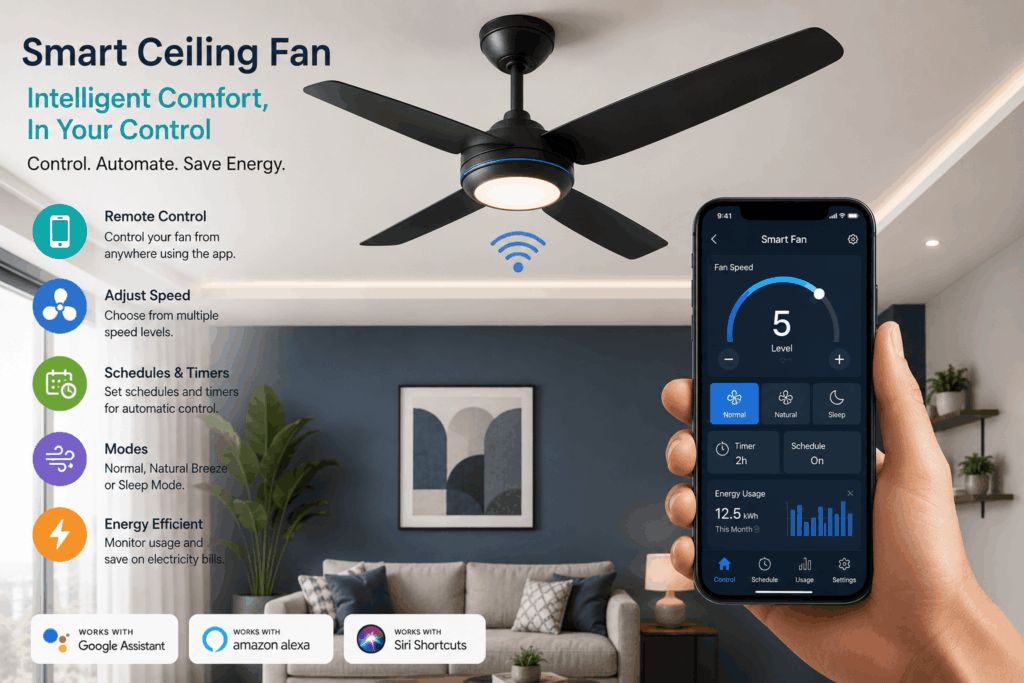
Traditional ceiling fans often continue running even when no one is in the room. Smart ceiling fans include sensors, timers, and mobile app controls to optimize electricity usage.
Energy-Saving Features
- Motion detection
- Automatic speed adjustment
- Sleep mode
- Scheduled operation
- Voice assistant integration
5. Smart Power Strips
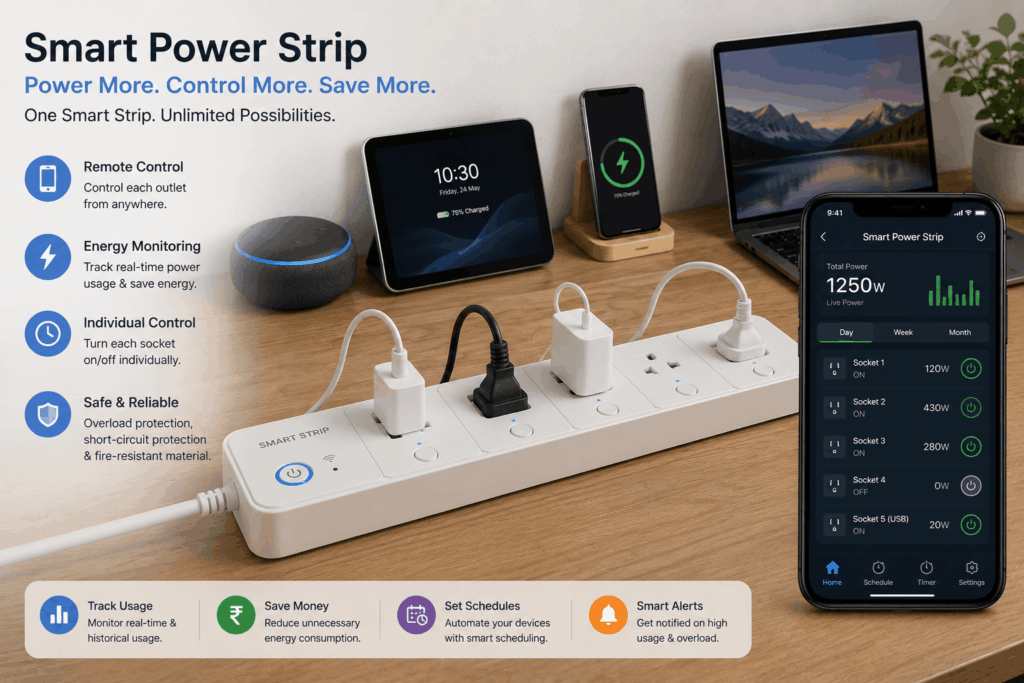
Many electronic devices continue consuming electricity even when switched off. This is known as standby or phantom power.
Smart power strips automatically cut power to inactive devices.
Common devices protected include:
- Computers
- TVs
- Gaming consoles
- Sound systems
- Chargers
This simple upgrade can noticeably reduce monthly electricity bills.
Best Smart Home System for Energy Efficiency
Choosing the right ecosystem makes managing multiple devices much easier.
Popular smart home platforms include:
- Google Home
- Amazon Alexa
- Apple HomeKit
These systems allow all your smart devices to work together through automation routines.
For example:
- Turn off all lights when leaving home.
- Switch off the AC after everyone leaves.
- Activate energy-saving mode during office hours.
6. Smart Motion Sensors
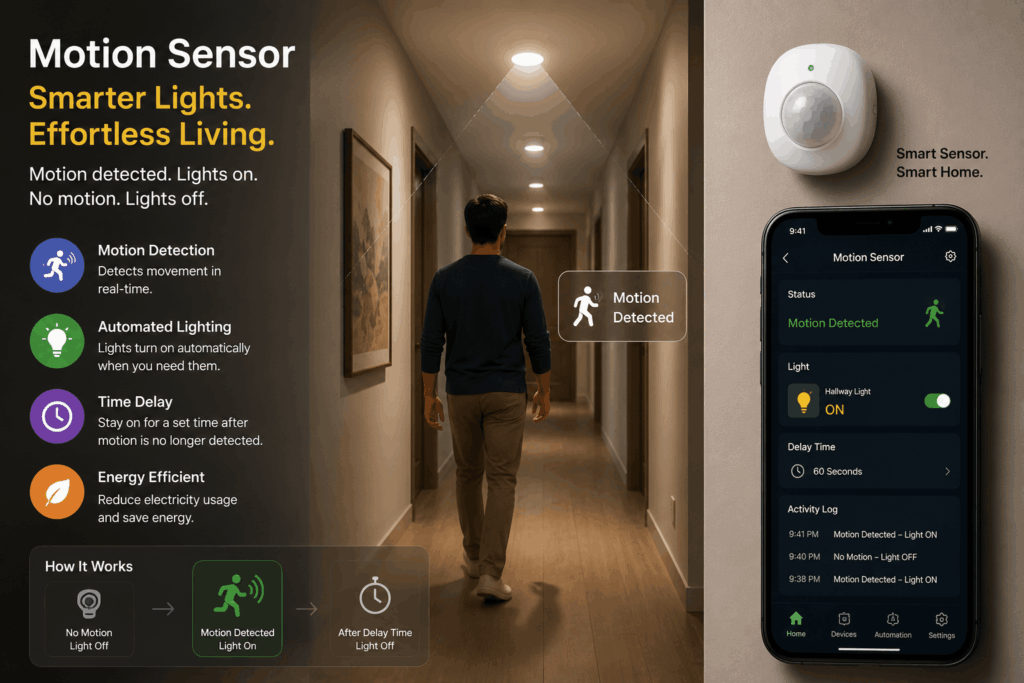
Motion sensors automatically control lighting based on movement.
They are especially useful in:
- Bathrooms
- Staircases
- Parking areas
- Garages
- Corridors
Instead of lights remaining on all day, they activate only when someone enters the area.
7. Smart Curtains and Blinds
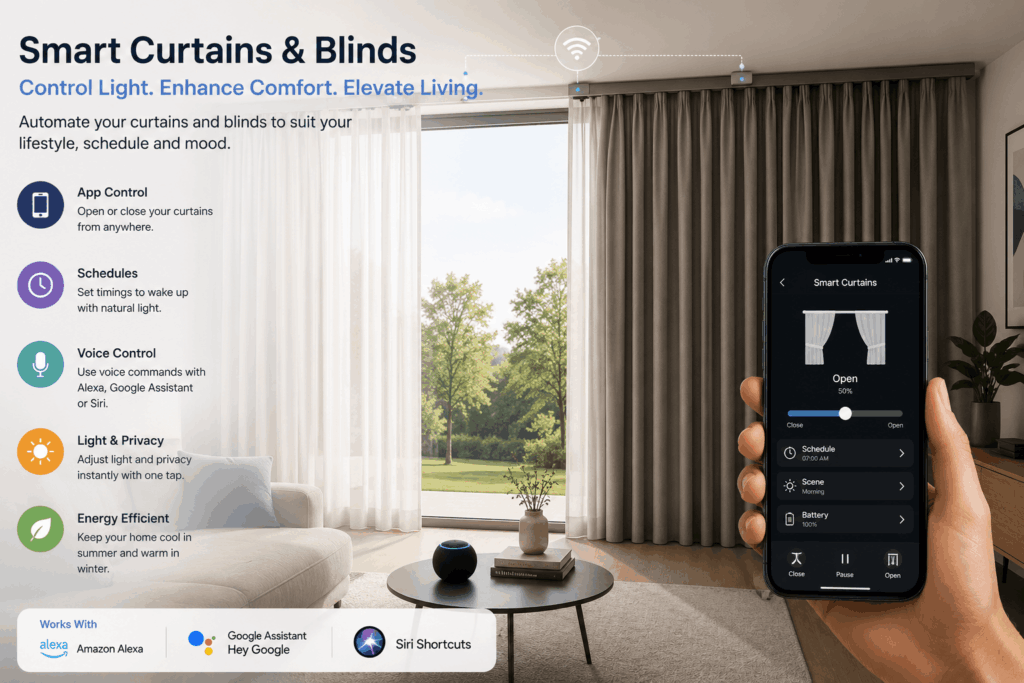
Natural lighting and temperature play an important role in electricity consumption.
Smart curtains automatically open during daylight and close during hot afternoons, reducing dependence on artificial lighting and air conditioning.
Benefits include:
- Better daylight usage
- Lower cooling costs
- Increased comfort
- Improved privacy
8. Smart Water Heaters
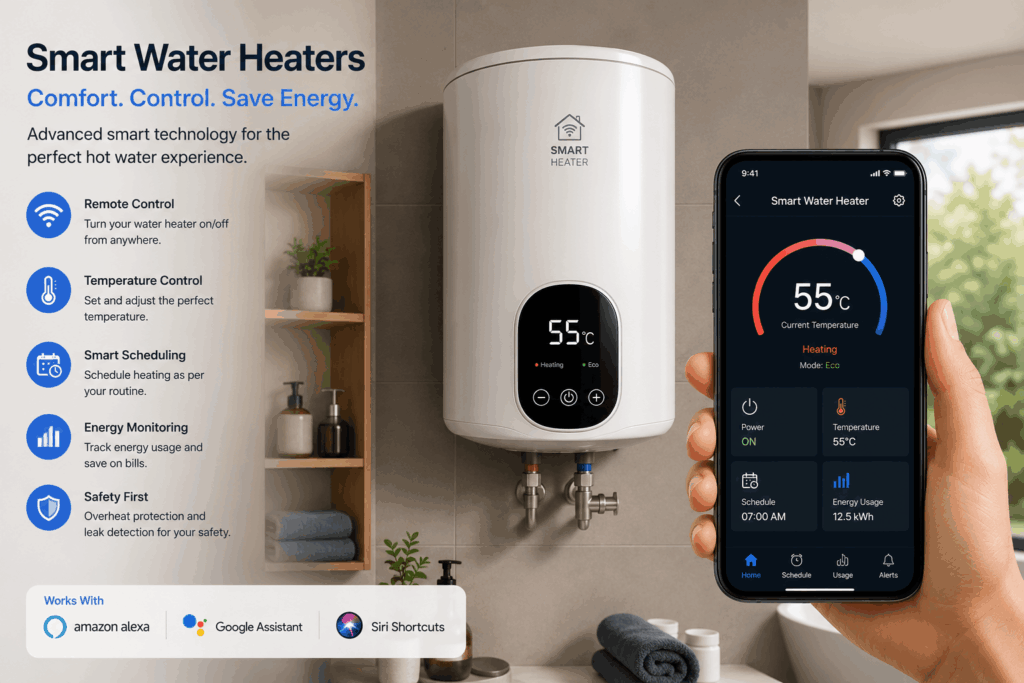
Water heaters consume a significant amount of electricity if left running continuously.
Smart water heaters allow homeowners to:
- Schedule heating times
- Monitor usage
- Turn off remotely
- Receive maintenance alerts
This prevents unnecessary electricity usage throughout the day.
9. Smart Refrigerators
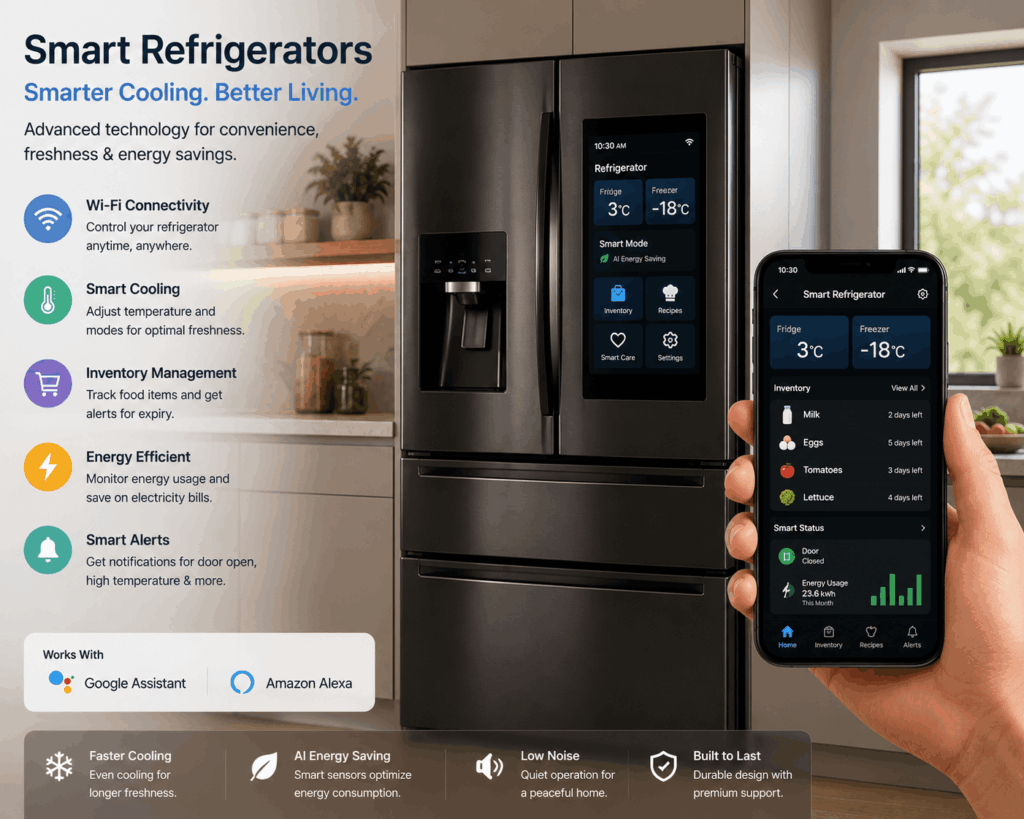
Modern smart refrigerators optimize cooling cycles based on usage patterns.
Features include:
- Temperature optimization
- Door-open alerts
- Vacation mode
- Energy-saving operation
Although the initial investment is higher, long-term electricity savings make them worthwhile.
10. Smart Energy Monitors
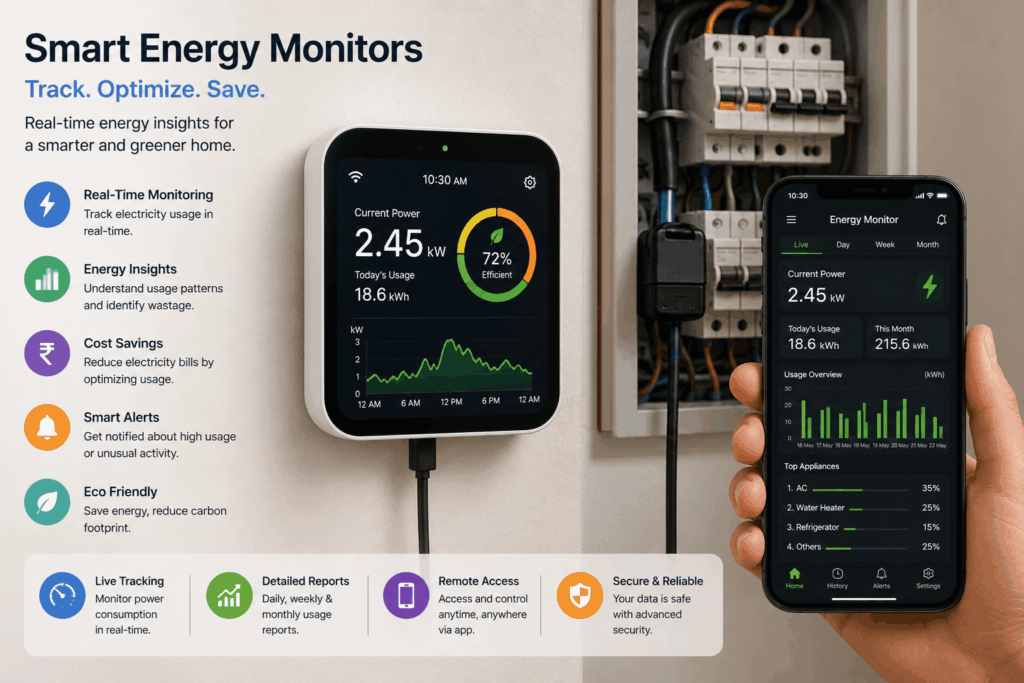
If you don’t know where electricity is being wasted, it’s difficult to reduce consumption.
Smart energy monitors provide detailed reports showing:
- Daily electricity usage
- Appliance-wise consumption
- Peak usage hours
- Monthly energy trends
This helps homeowners make informed decisions about reducing power consumption.
How to Choose the Best Smart Home Devices
Before purchasing any smart device, consider the following factors:
Compatibility
Ensure the device works with your preferred ecosystem such as Google Home or Alexa.
Energy Monitoring
Choose products that provide real-time electricity usage data.
Automation Features
Look for scheduling, motion detection, and smart routines.
Ease of Installation
Some devices require professional installation, while others are plug-and-play.
Warranty and Support
Always purchase from trusted brands that offer reliable after-sales service.
Tips to Maximize Electricity Savings
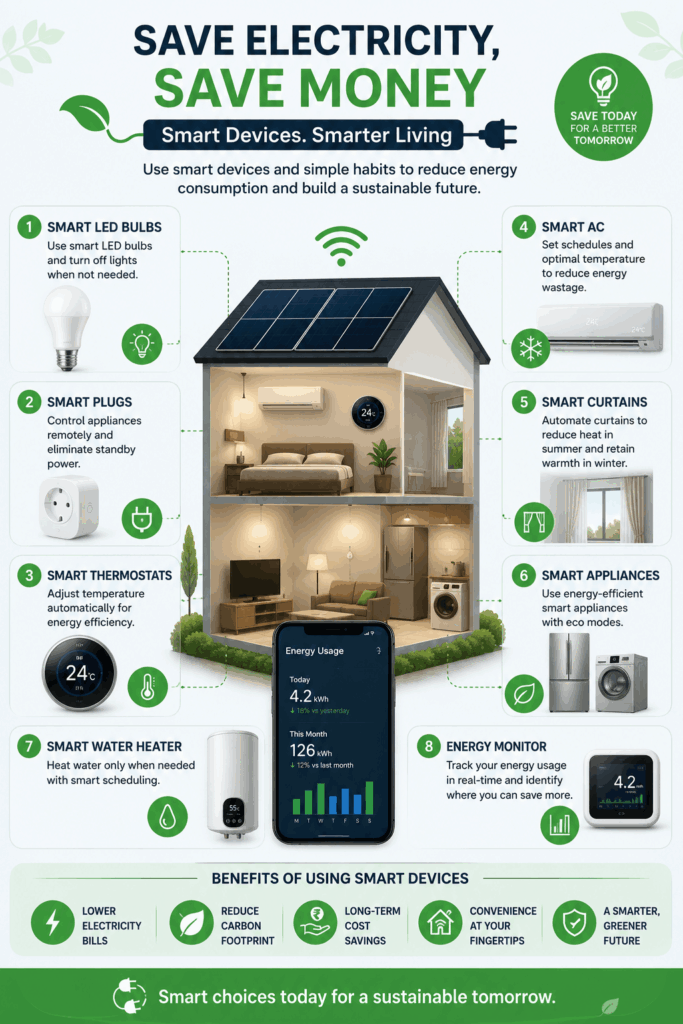
Installing smart devices is only the first step. To achieve maximum savings:
- Replace old appliances with energy-efficient models.
- Use LED lighting throughout your home.
- Set schedules for lights and AC.
- Turn off standby appliances.
- Monitor electricity usage weekly.
- Combine automation with occupancy sensors.
- Regularly update device firmware.
Small changes can collectively lead to significant reductions in electricity bills over time.
Frequently Asked Questions
Do smart home devices really save electricity?
Yes. By automating appliance usage, eliminating standby power, and providing energy monitoring, smart home devices can significantly reduce unnecessary electricity consumption.
Are smart home devices expensive?
Entry-level devices like smart plugs and smart bulbs are affordable. While advanced devices cost more initially, they often provide long-term savings through reduced electricity bills.
Which smart device saves the most electricity?
Smart thermostats or smart AC controllers typically offer the highest savings because air conditioners are among the largest electricity consumers in Indian homes.
Conclusion
Investing in Smart Home Devices That Save Electricity is one of the smartest decisions for homeowners looking to reduce energy bills while improving comfort and convenience. From smart plugs and LED bulbs to energy monitors and automated AC controllers, each device plays a role in making your home more efficient. By choosing compatible products, using automation wisely, and monitoring your electricity usage regularly, you can enjoy substantial long-term savings while contributing to a greener future. As smart technology becomes more affordable and accessible, now is the perfect time to upgrade your home with Smart Home Devices That Save Electricity.
Ready to Build a Smarter, More Energy-Efficient Home?
Start with affordable devices like smart plugs and LED bulbs, then gradually expand your setup with smart thermostats, motion sensors, and energy monitors. Explore trusted brands, compare features, and choose products that fit your budget and lifestyle. The sooner you adopt Smart Home Devices That Save Electricity, the sooner you’ll start saving on your monthly electricity bills while making your home smarter and more sustainable.